How to Clean a Baseball Cap Without Ruining It
Written by: Abi, Founder of The Captician - Hat Care Expert

If your hat is dirty or stained, the last thing you want to do is ruin it trying to clean it. The safest cleaning method depends on the stain, the fabric, and what the brim is made from.
Get it wrong, and you can damage the shape, fade the colour, make the fabric fuzzy, or soften the brim.
This guide explains how to clean and maintain baseball caps safely, including fitted hats, snapbacks, dad hats, trucker hats, and other structured or unstructured styles.
Jump to Guide Sections
Quickly find the advice you need
- > Washing a Hat in the Washing Machine
- > Cleaning a Hat in the Dishwasher
- > Checking Your Hat’s Brim Material
- > Parts of a Hat to Check Before Cleaning
- > Identifying the Type of Stain
- > How Fabric Type Affects Cleaning
- > The Safest Way to Clean a Hat
- > Removing Sweat Stains
- > Preventing Water Marks When Spot Cleaning
- > Routine Hat Maintenance
- > Hat Care FAQs
Jump to Guide Sections
Quickly find the advice you need
Common Cleaning Mistakes
- Washing a Hat in the Washing Machine
- Washing a Hat in the Dishwasher
Before You Clean
- Checking Your Hat’s Brim Material
- Parts of a Hat to Check Before Cleaning
- Identifying the Type of Stain
- How Fabric Type Affects Cleaning
Cleaning Methods
- The Safest Way to Clean a Hat
- Removing Sweat Stains
- Preventing Water Marks When Spot Cleaning
Ongoing Care
- Routine Hat Maintenance
- Hat Care FAQs
Can You Wash a Baseball Cap in the Washing Machine?
No, washing machines use agitation and spin cycles that can damage the crown and wrinkle the fabric, even with a hat cage.
If the brim contains cardboard, soaking can permanently soften it and cause it to lose its stiffness.
The only exception would be old unstructured beater hats with a plastic brim, something you don’t mind shrinking, warping, wrinkling or fading.
For hats you care about, hand washing or spot cleaning is the safer option.
[ Blog - Is it safe to wash your hats in the washing machine?]

Can You Put a Hat in the Dishwasher?
No, even if you use a hat cage.
Dishwashers fully soak the hat, which can permanently soften cardboard brims and damage the structure of the crown.
A dishwasher is not designed to clean fabric. The detergents used are not suitable or effective for cleaning fabrics and can cause fading.
Back to contents ↑
Check the Brim Before Cleaning
What the brim is made from determines how safely the hat can be cleaned.

Plastic brim: Safe to hand wash.
Cardboard brim: Should not be soaked. Water can soften it, warp it, and permanently damage its structure.
Once a cardboard brim has been water-damaged, it usually cannot be properly restored. Starch may temporarily add stiffness, but it will not bring the brim back to its original condition.
For cardboard brims, the safest method is usually to use a fabric-safe hat cleaner with a damp microfibre cloth rather than soaking the hat.
Not sure which type you have?
Read: [How to tell if your brim is cardboard or plastic]
Need to clean a hat with a cardboard brim?
See: [How to hand wash hats with cardboard brims]
Parts of a Hat That Need Extra Care
Different areas of a hat react differently to water, heat and friction.
The brim - If it contains cardboard or a resin blend, soaking can reduce stiffness.
Front crown panels - Structured crowns are reinforced with buckram. Soaking in hot water or exposing the hat to high heat can cause the panels to lose shape and stiffness.
Embroidery - Aggressive brushing can cause threads to fray.
Leather patches or straps - Water exposure can cause colour transfer onto surrounding fabric and may lead to cracking over time.
Faux leather patches or details - These can peel when exposed to excess moisture or cleaners.
Leather or suede brims - Require dedicated leather or suede cleaners and should not be treated with fabric products.
Squatchee (top button) - If corroded from sweat, washing can cause rust to bleed into the surrounding fabric.
Hat fabric - Wool and wool blends require wool-safe cleaners. Scrubbing can cause piling, and heat can lead to shrinkage.
If you're unsure about colour stability, test a small hidden area first.
Back to contents ↑
Types of Hat Stains
Before choosing a cleaning method, it helps to understand what caused the stain. Identifying the source of the stain makes it easier to choose the safest and most effective cleaning approach.
Most hat stains fall into four categories:

Water-Based Stains (Food & Drinks)
These stains usually respond well to cleaning with a hat cleaner or hand washing. Use a wool-safe detergent when cleaning wool hats.

Oil-Based Stains (Hair Oil, Sunscreen, Grease)
Oil-based stains cling to fabric fibres and do not dissolve in water, making them harder to remove. They often require more than one cleaning pass or a full hand wash to fully lift the residue.

Particulate Stains (Dirt, Dust or Ash)
These stains are made of small particles that often sit on the surface of the fabric. Remove as much dry dirt as possible by brushing first. If staining remains, follow with spot cleaning or hand washing

Chemical-Change Stains (Rust or Colour Changes)
These stains occur when the fabric dye or fibres have changed due to a chemical reaction. Cleaning alone won’t fully restore the original appearance. Depending on the type of stain:
Hydrogen peroxide can help lighten oxidation stains on light fabrics.
Fabric dye is often needed to restore colour on darker hats.
Rust remover is used for rust-related staining.

Combination Stains
Some stains contain multiple components. Grass stains, for example, include both dirt and natural dyes from the grass. Because these require different types of cleaning products, no single cleaner can remove every type of stain. Treating the stain in stages usually gives better results than relying on one product alone.
However, even with the correct cleaning method, not every stain can be completely removed.
If you want to understand why some stains remain even after cleaning, see our guide: [Why Some Hat Stains Won’t Come Out →]
How Fabric Affects Cleaning
The fabric your hat is made from determines how it reacts when it gets dirty and how it should be cleaned.
How easily a stain absorbs into the fabric and how difficult it is to remove both depend on what the hat is made from.
Always check the care label to identify the fabric before cleaning.

Cotton
Cotton absorbs water quickly, so stains can penetrate the fabric easily. It holds moisture, cotton hats are more susceptible to:
- Water marks if moisture dries unevenly during spot cleaning
- Shrinkage when exposed to heat
- Colour fading if cleaned aggressively
Avoid unnecessary hand-washing and always air dry naturally.
Wool & Wool Blends
Wool reacts strongly to water, heat, and agitation.
When wool becomes wet, it can lose up to 25% of its strength, which means the fibres are easier to stretch, distort, or damage while the hat is being cleaned. Wool hats can:
- Shrink if exposed to heat
- Pill if scrubbed
- Lose shape if handled roughly while wet
- Weaken over time if cleaned with enzyme-based detergents
Use wool-safe cleaners only, avoid scrubbing, and allow the hat to air dry naturally away from direct sunlight.
Polyester
Polyester absorbs far less water than natural fibres, which means many stains sit closer to the surface rather than soaking deeply into the fabric.
Because of this, polyester hats are generally:
- Less prone to shrinking
- Faster drying after cleaning
- More resistant to water-based stains
However, oil-based stains (such as hair products, sunscreen, or grease) can cling more stubbornly to polyester and may require repeated spot cleaning.
Understanding the type of stain and the fabric helps you avoid unnecessary damage.
The safest way to clean a hat is to start with the least invasive method and only introduce more moisture or different cleaning products when it’s truly needed.
Back to contents ↑
The Safest Way to Clean a Baseball Cap
Cleaning should be done in stages.

Start with Brushing
Brush regularly after wear to prevent dust and debris from building up. Only brush a hat when it is dry. Use brushes designed specifically for hats or fabrics. [How to brush a hat properly →]

Spot Cleaning (Cleaning One Area Only)
Spot cleaning with The Captician Hat Cleaner is ideal when only one area is dirty. You do not need to clean the entire hat if the rest is clean. [See how to clean stains from your hats →]

Hand Washing
Hand washing should only be done when a deeper clean is necessary. Avoid unnecessary hand washing, as repeated washing accelerates normal wear. Always check the brim material before fully soaking a hat. [Watch how to hand-wash a hat safely →]
How to Remove Sweat Stains from a Hat
Sweat stains on hats can appear in different ways depending on how sweat has affected the fabric.
Some stains sit on the surface and can be cleaned away, while others develop when sweat chemically reacts with the dye in the fabric over time.
This reaction is called oxidation. It occurs when compounds in sweat interact with oxygen in the air, which can alter or lighten the dye in the fabric rather than simply leaving a surface stain.
Understanding the difference helps determine whether a stain can be cleaned or if the colour of the fabric itself has already changed.

Surface salt deposits from sweat
These white marks are caused by salt left behind when sweat dries on the fabric.
This hat was hand-washed to dissolve and remove the salt deposits, restoring the original appearance.

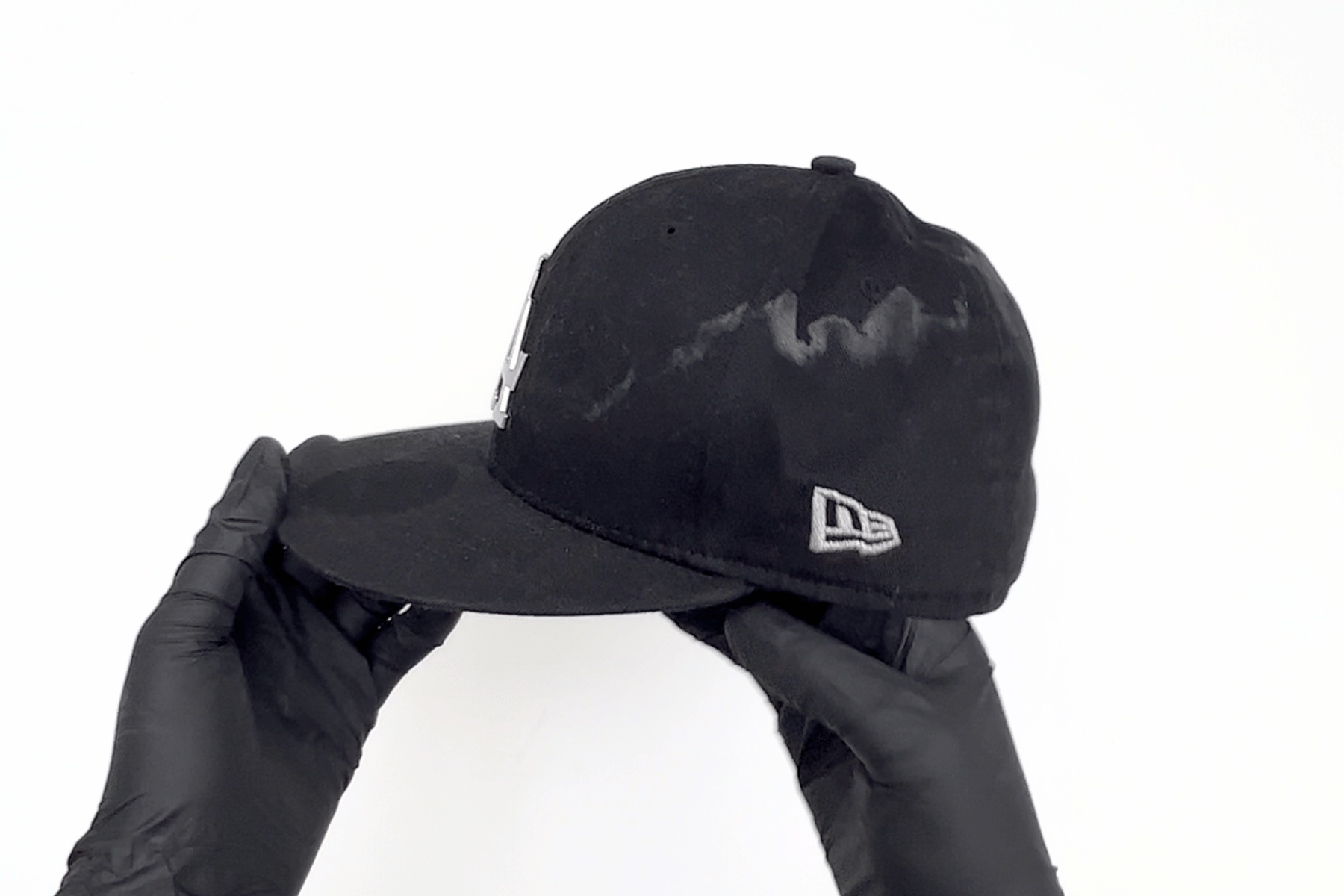
Oxidised sweat staining on a dark hat
On darker fabrics, oxidised sweat can lighten the dye, leaving visible faded areas. This hat was hand-washed then carefully re-dyed to restore the original colour.

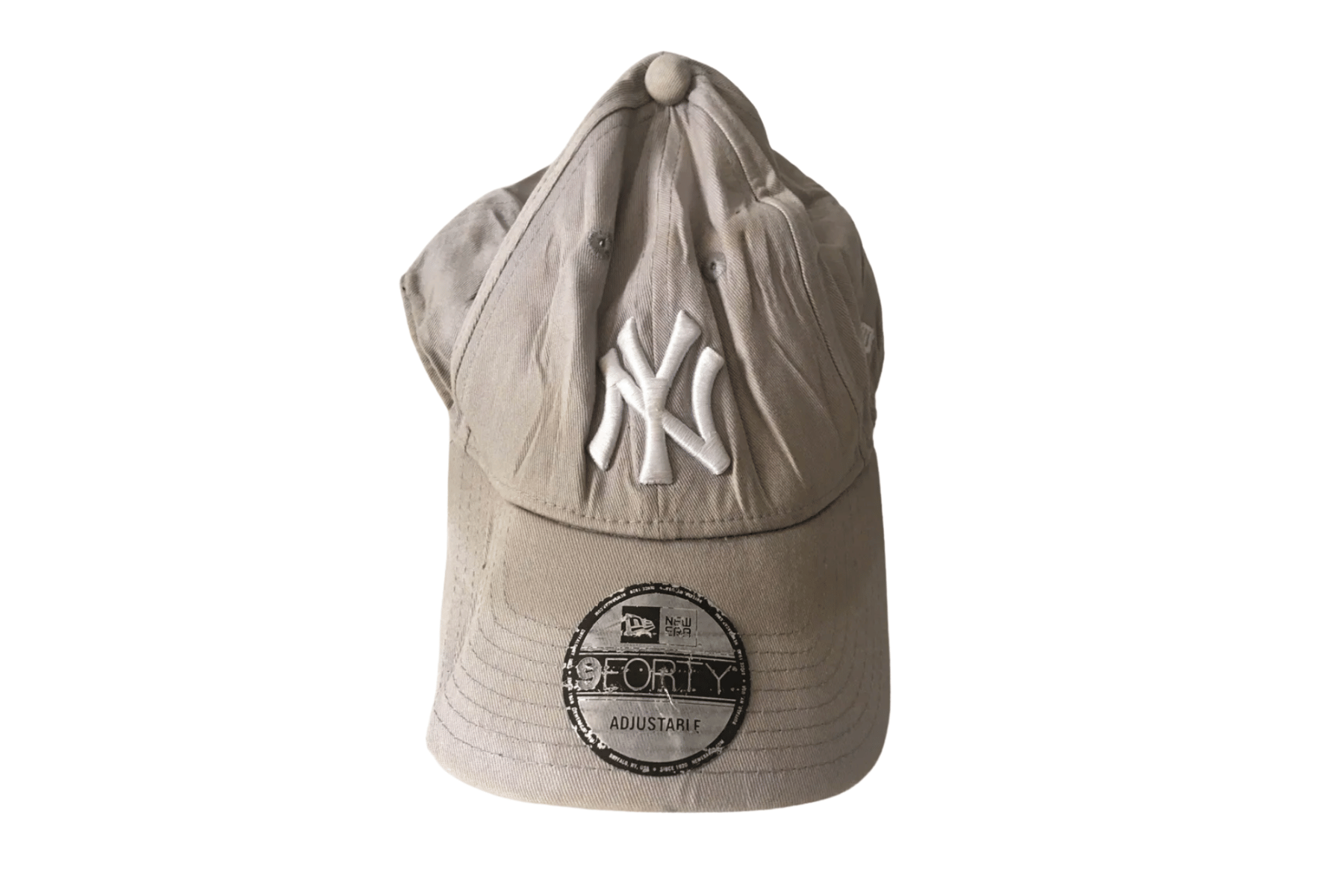
Oxidised sweat staining on a light-coloured hat
On light-coloured hats, oxidised sweat often causes yellow or brown discolouration.
After hand washing, hydrogen peroxide was used to safely lighten the stained area, improving the overall appearance. If you want to see the full method for using hydrogen peroxide safely, including how to prevent water rings when treating sweat stains,
see our guide on does baking soda remove sweat stains from hats.
Back to contents ↑
How to Prevent Water Marks When Spot Cleaning
Water marks occur when only one area is wet. As it dries, moisture can travel outward and leave a visible ring. To prevent this, moisture should be balanced across the surrounding area so it dries evenly.
Where to mist (based on where the stain or dirt is located):
Crown – Mist the full crown
Brim – Mist both top and underside
Sweatband – Do not pre-mist
[Watch the full demonstration →]
Routine Hat Maintenance
Protect it when new - Apply a stain and water repellent when you first buy the hat.
Brush regularly - Prevents dust and debris from building up.
Store properly - Keep out of direct sunlight to reduce fading. Store in a closet or covered storage to protect from dust.
Avoid unnecessary washing - Only hand-wash when truly needed.
Clean and Maintain Your Hats with Confidence
Cleaning a hat properly isn’t about scrubbing harder or using stronger products. It’s about understanding the material, identifying the stain, and choosing the least aggressive method first.
Most damage happens from excessive heat, too much water, the wrong cleaning solution, or skipping essential checks before cleaning.
When you take a controlled approach, you protect the shape, preserve the colour, and extend the life of your hats. With the right knowledge and routine maintenance, there’s no need to use washing machines, dishwashers, or scrubbing, all of which can damage a hat.
At The Captician, we focus on cleaning methods that protect the shape, fabric and brim of a hat while safely removing stains and extending the life of your hats. With what you’ve learned in this guide and the other tutorials on this site, you’ll be able to confidently and safely clean and maintain your hats.